 Melih Abdulhayoglu
43 days. That was the median time organizations took to fully fix a known exploited vulnerability after finding it in their systems, according to Verizon’s 2026 Data Breach Investigations Report.
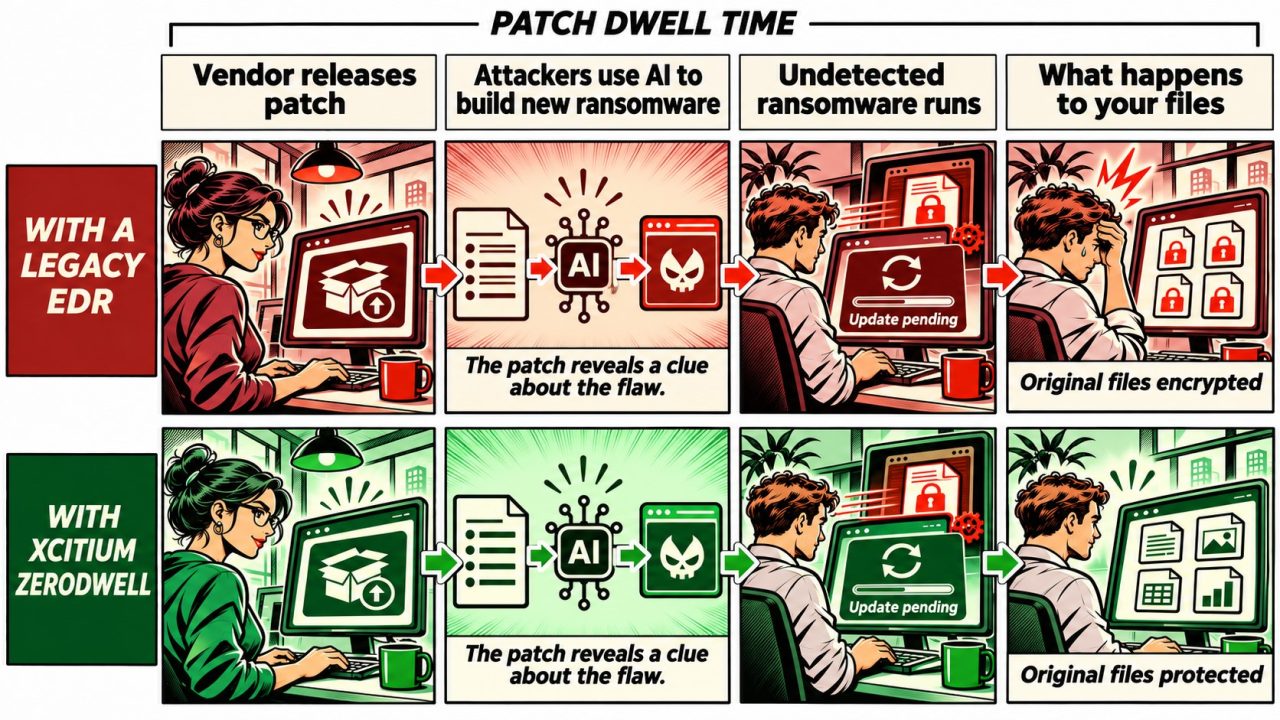
I call the gap between a vendor releasing a patch and a business installing it patch dwell time. The fix is public, and computers that haven’t been updated are still vulnerable.
AI is speeding up both sides
- Software vendors are using AI to find flaws faster so they can fix them sooner.
- Criminals are using AI to study those fixes and quickly build and launch attacks against computers that haven’t been updated.
Here’s the irony. The same patch that fixes a flaw can show criminals where it was. They’ve done this for years. AI lets them do it much faster and across more software at once. Your IT team may still be testing the patch when criminals are already exploiting the flaw.
That’s why a periodic audit can only tell you so much. Keep checking what’s exposed and fix the weaknesses that give attackers a way in. An old account and a server it can still reach might each look like a small problem. Together, they can give an attacker access to sensitive data.

The flaw in legacy EDR was always there
Legacy endpoint detection and response (EDR) is built around detection. When stopping ransomware depends on recognizing it first, ransomware the product hasn’t detected can start encrypting your files. That architectural flaw existed long before AI. Now criminals have more chances to take advantage of it.
Ask your security vendor one question:
” When ransomware your product hasn’t detected starts running, what stops it from encrypting and sending my files to ransomware gangs?“
That’s why we built Xcitium ZeroDwell. On a protected computer, it prevents unknown ransomware from encrypting your original files from the moment it starts running. Your files are protected while your team rolls out the patch.