
 Melih Abdulhayoglu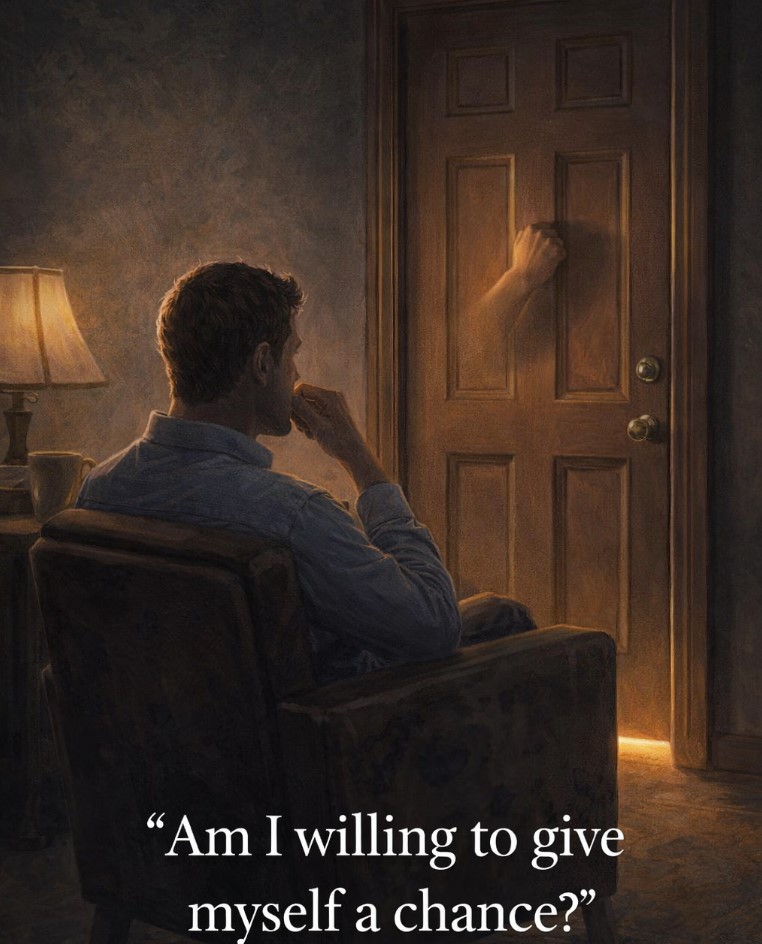
“When the winds of change blow, some people build walls and others build windmills.”
— Chinese proverb
1. The Misunderstanding About Success
Most people misunderstand the difference between success and failure.
They think success is about:
- Intelligence
- Timing
- Resources
- Luck
It isn’t.
The real difference usually comes down to something far simpler—and far more uncomfortable:
Did you hear the opportunity knock, and did you answer the door?
2. Opportunity Is Always Knocking (Quietly)
Opportunity almost never looks like opportunity.
It doesn’t arrive with guarantees.
It doesn’t explain the upside.
It doesn’t come with a roadmap.
Most of the time, it shows up disguised as friction, curiosity, or discomfort.
Here’s what “opportunity knocking” actually looks like in the real world:
2.1 Friction & Annoyance
- An annoyance in a product you use every day
- A workflow that feels unnecessarily slow or inefficient
- A tool that almost works—but not quite
- Repeating the same manual task and thinking, “There has to be a better way”
- Explaining the same thing over and over to different people
These aren’t inconveniences.
They’re unmet demand trying to get your attention.
2.2 Curiosity & “Why Is This Like This?”
- “Why hasn’t anyone done this differently?”
- “Why is this always done this way?”
- “Why doesn’t this integrate with that?”
- “Why is this so expensive for what it actually delivers?”
- “Why does this feel harder than it should be?”
Curiosity isn’t random.
It’s your mind noticing gaps others have normalized.
2.3 Personal Pain Points
- A recurring problem in your own life or work
- A workaround you’ve built just to function
- A spreadsheet you maintain because nothing else fits
- A note you keep rewriting because the issue never fully goes away
- A process you tolerate because “that’s just how it is”
If it hurts you, it likely hurts others too.
2.4 Patterns You Can’t Unsee
- Seeing the same problem across different teams or companies
- Hearing the same complaints from customers, colleagues, or friends
- Watching different people struggle with the same limitation
- Noticing that the “official solution” never addresses the root cause
Patterns are opportunity knocking repeatedly—hoping you’ll listen.
2.5 Discomfort & Internal Resistance
- An idea that excites you and scares you at the same time
- A thought you immediately try to rationalize away
- A direction you avoid because it feels risky
- Something you keep thinking about—but never say out loud
- A pull toward something unfamiliar
Discomfort is rarely a stop sign.
It’s often a signal that something meaningful is nearby.
2.6 Change, Disruption & Instability
- A market shift that makes people uneasy
- New regulations that complicate existing systems
- Technology that breaks old assumptions
- A process that no longer scales
- A role or industry that suddenly feels outdated
When the ground moves, opportunity doesn’t ask permission—it just shows up.
2.7 Conversations That Linger
- Feedback that hits harder than expected
- Advice you keep replaying in your head
- A question you can’t stop thinking about
- A challenge someone throws at you that refuses to leave
If a conversation stays with you, it’s knocking.
2.8 Energy, Obsession & Attention
- You keep coming back to the same idea
- You research it “just out of curiosity”
- You explain it to others without being asked
- You think about it when you’re not supposed to
- You feel unusually energized by it
Attention you can’t turn off is rarely accidental.
2.9 The Common Thread
None of these feel like “success.”
They feel like:
- Annoyance
- Curiosity
- Frustration
- Unease
- Inconvenience
- Uncertainty
That’s why most people ignore them.
The knock isn’t loud.
It isn’t polite.
And it doesn’t repeat forever.
3. Answering the Door Doesn’t Mean You’ll Succeed
This is where most narratives become dishonest.
Answering the door does not make you successful.
It only gives you a chance.
But one truth matters more than all others:
You cannot win a game you refuse to enter.
Not answering the door guarantees the outcome.
Answering it creates possibility.
Nothing more. Nothing less.
4. The Optimist vs. The Pessimist (A Thought Experiment)
Consider two people facing the same opportunities.
4.1 The Pessimist
The pessimist hears the knock and says:
- “Not worth it.”
- “The odds are low.”
- “The risk is too high.”
They never open the door.
Result:
- 0 attempts
- 0 failures
- 0 successes
- 0 learning
A guaranteed outcome.
4.2 The Optimist
The optimist hears the same knock and says:
- “Maybe.”
- “Let’s try.”
- “Worst case, I learn something.”
They answer the door every time.
Even if only 1 out of 100 attempts succeeds, the math is brutal:
- Optimist: non-zero probability
- Pessimist: guaranteed zero
The optimist is already ahead.
5. Why Even Failure Compounds Forward
Now assume the optimist never succeeds—not once.
They still win.
Because after 100 attempts, they’ve accumulated:
- Experience
- Pattern recognition
- Judgment
- Context
- Emotional resilience
- Timing
They don’t just answer doors anymore.
They recognize which doors matter.
When the opportunity that actually counts finally knocks, they’re ready.
The pessimist is exactly where they started—unchanged, untrained, unprepared.
6. Walls or Windmills
This is why the proverb endures.
When change arrives—when the wind starts blowing—you have two choices:
- Build walls
Protect comfort. Preserve certainty. Avoid exposure. - Build windmills
Accept movement. Harness uncertainty. Generate momentum.
Walls feel safe.
Windmills create power.
7. Success Is a Probability Game
Success is not a promise.
It’s a probability distribution.
- Not answering the door = guaranteed failure
- Answering the door = non-zero chance + compounded learning
Over time, probability favors participation.
8. The Only Question That Matters
So the real question isn’t:
“Will this opportunity make me successful?”
It’s:
“Am I willing to give myself a chance?”
Because success doesn’t come from certainty.
It comes from participation.
And participation starts the moment you decide to open the door.